Table of Contents
How Geography Shapes National Borders: Natural Features That Define Nations
When we look at a world map, we see neat lines dividing countries—some straight as rulers, others following serpentine paths along rivers or mountain ridges. These borders represent more than political agreements; they tell stories of how Earth’s physical features have shaped human civilization for millennia. From the towering Himalayas to the winding course of the Rio Grande, geography has been the primary architect of national boundaries throughout history.
While politics, warfare, and diplomacy ultimately draw the lines on maps, it is the natural landscape—mountains, rivers, deserts, and seas—that often determines where those lines begin, how they evolve, and whether they endure. Understanding the relationship between geography and borders reveals not only the story of our planet’s diverse landscapes but also illuminates the forces that continue to influence international relations, cultural identities, and geopolitical tensions today.
The Natural Foundations of Political Boundaries
Long before modern cartography, satellite imagery, and GPS systems, humans relied on geographical landmarks as natural boundaries. These features weren’t just convenient markers—they served multiple practical purposes that made them logical choices for territorial divisions.
Why Natural Features Make Effective Borders
Natural boundaries offered early civilizations several critical advantages:
Visibility and Recognition: Mountains, rivers, and coastlines are obvious, unmistakable features that both parties can identify without sophisticated surveying equipment.
Defensive Value: Natural barriers like mountain ranges and wide rivers provide military protection, making invasion more difficult and costly.
Reduced Maintenance: Unlike walls or fences, natural borders require minimal upkeep and rarely need physical demarcation.
Persistence Over Time: While political agreements change, mountains and major rivers remain relatively stable landmarks for centuries or millennia.
Psychological Significance: Natural boundaries create a sense of separation that reinforces distinct identities on either side.
These advantages explain why approximately 23% of the world’s international borders follow rivers, and countless others trace mountain ridges, coastlines, or other natural features.
Mountains: Nature’s Most Formidable Barriers
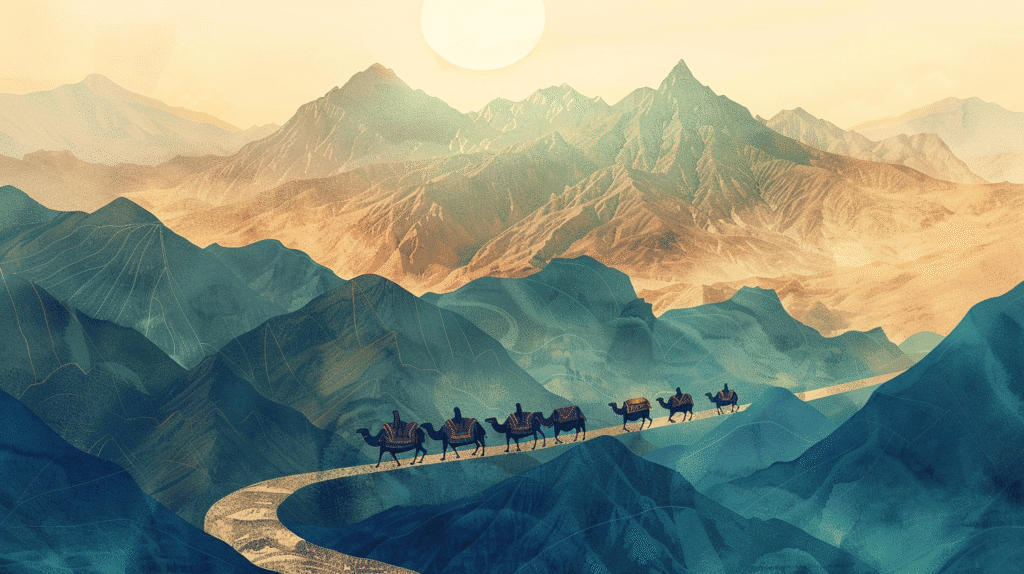
Mountain ranges represent some of the most enduring natural borders in human history. Their physical imposingness creates formidable obstacles to transportation, communication, and military movement—factors that have shaped civilizations and defined nations for thousands of years.
How Mountains Shape Borders and Cultures
The barrier effect of mountains extends far beyond physical separation. High elevations create distinct climatic zones, making life on either side of a range dramatically different. This environmental division naturally leads to separate cultural development, distinct languages, and unique political identities.
The Himalayas: Forming the world’s highest natural border, this massive range separates the Indian subcontinent from the Tibetan Plateau and China. With peaks exceeding 29,000 feet (8,800 meters), the Himalayas create such a profound barrier that the cultures, religions, and languages of South Asia developed largely independently from those of East Asia for millennia.
The Andes: Stretching over 4,300 miles along South America’s western edge, the Andes have historically divided coastal civilizations from Amazonian cultures. The mountains help define borders between Chile and Argentina, Colombia and Ecuador, and influence boundaries throughout the continent. The dramatic elevation changes—from sea level to over 22,000 feet—create distinct ecosystems and cultural zones within relatively short distances.
The Pyrenees: This mountain range forms a natural barrier between France and Spain, creating a border that has remained remarkably stable since the Treaty of the Pyrenees in 1659. The physical isolation created by these mountains helped preserve distinct cultures like the Basque people, whose language and traditions differ dramatically from both French and Spanish cultures.
The Alps: Perhaps no mountain range has influenced more international borders than the Alps, which touch eight countries and help define boundaries between France, Switzerland, Italy, Austria, and others. The Alps’ role in European history is profound—they channeled migration routes, influenced military campaigns from Hannibal to World War II, and created pockets of linguistic and cultural diversity that persist today.
Mountain Passes: Where Borders Become Contested
Interestingly, the most stable mountain borders often become contentious at mountain passes—the few locations where crossing becomes feasible. Throughout history, control of strategic passes like the Khyber Pass (connecting Afghanistan and Pakistan) or the Brenner Pass (connecting Italy and Austria) has been fiercely contested, precisely because they represent the weak points in otherwise impenetrable barriers.
Rivers: Lifelines That Divide and Unite
Rivers present a fascinating paradox in border formation—they simultaneously connect and separate populations. While mountains create barriers to movement, rivers facilitate transportation and trade, yet they still serve as effective political boundaries.
The Dual Nature of River Borders
Rivers offer unique advantages as borders:
Clear Demarcation: A river’s course provides an obvious, visible line of separation that both parties can recognize.
Natural Obstacles: Even navigable rivers present barriers to casual crossing, especially during flood stages or before modern bridge construction.
Economic Significance: Rivers often become zones of shared interest, encouraging diplomatic relations even between rival nations.
Military Defense: Rivers provide defensive lines that are difficult to cross during conflict.
Famous River Borders Around the World
The Rio Grande: Defining approximately 1,250 miles of the U.S.-Mexico border, the Rio Grande (known as Río Bravo del Norte in Mexico) demonstrates both the advantages and challenges of river boundaries. The river provides a clear, natural demarcation, but its course has shifted over time due to erosion, flooding, and changes in water flow—leading to disputes over land ownership and periodic treaty renegotiations.
The Danube River: One of Europe’s most significant waterways, the Danube flows through or forms part of the borders of ten countries: Germany, Austria, Slovakia, Hungary, Croatia, Serbia, Romania, Bulgaria, Moldova, and Ukraine. This shared river has necessitated extensive international cooperation on navigation rights, environmental protection, and resource management.
The Rhine River: Forming portions of borders between Switzerland, Liechtenstein, Austria, Germany, France, and the Netherlands, the Rhine has been central to European history and politics for over two millennia. Control of the Rhine has sparked countless conflicts, yet it has also facilitated trade and cultural exchange that helped forge modern European identity.
The Mekong River: Flowing through six countries in Southeast Asia, the Mekong demonstrates how rivers can serve as both borders and shared resources. It forms portions of the borders between Myanmar and Laos, Laos and Thailand, and influences regional politics through its critical importance for fishing, transportation, and agriculture.
The Challenge of Shifting River Courses
Unlike mountains, rivers are dynamic features that constantly change their courses through natural processes:
- Erosion gradually shifts riverbanks
- Flooding can create entirely new channels (avulsion)
- Sediment deposition alters flow patterns
- Human intervention (dams, levees, channelization) modifies natural courses
These changes create unique legal challenges. When a river that forms a border shifts its course, which country owns the “abandoned” land? Different international agreements use different principles:
Thalweg Principle: The border follows the river’s deepest channel, adjusting as it moves.
Fixed Boundary: The border remains where the river was when the treaty was signed, regardless of later changes.
The Mississippi River has generated numerous intrastate boundary disputes in the United States as its meanders have shifted over time, sometimes leaving parcels of one state on the “wrong” side of the river.
Deserts: Dividing by Distance and Inhospitality
Deserts function as natural borders through their vast expanses of inhospitable terrain rather than providing clear demarcation lines. The sheer difficulty of crossing and surviving in desert environments has historically limited interaction between populations on opposite sides, naturally creating distinct civilizations and eventual political boundaries.
How Deserts Shape Geopolitical Divisions
The Sahara Desert: Covering over 3.6 million square miles, the Sahara forms one of Earth’s most significant climatic and cultural dividing lines. It separates Mediterranean North Africa from sub-Saharan Africa, creating a boundary more profound than most political borders. The desert’s influence extends beyond geography—it divides Arab and Islamic cultures to the north from sub-Saharan African cultures, languages, and traditions to the south.
Historically, only a few trans-Saharan trade routes connected these regions, creating economic and cultural chokepoints that influenced the development of kingdoms and empires on both sides. Modern borders in the Sahara region—between countries like Algeria, Mali, Niger, and Libya—often run through empty desert, making exact demarcation and border control extremely challenging.
The Arabian Desert: Covering much of the Arabian Peninsula, this desert has shaped borders between Saudi Arabia and its neighbors. The Empty Quarter (Rub’ al Khali), one of the world’s largest sand deserts, remained so inhospitable that borders in this region weren’t precisely defined until oil exploration made territorial claims valuable in the mid-20th century.
The Gobi Desert: Separating Mongolia from China, the Gobi has historically created a buffer zone between nomadic steppe cultures and agricultural Chinese civilization. This desert boundary influenced the construction of the Great Wall and shaped millennia of interaction between these distinct societies.
The Ambiguity of Desert Borders
Unlike rivers or mountain ridges, deserts lack clear internal features for precise border demarcation. This has led to:
- Disputed territories where exact boundaries remain unclear
- Conflicts over newly discovered resources (particularly oil and minerals)
- Challenges in border enforcement across vast, unpopulated areas
- Reliance on arbitrary straight-line borders drawn on maps
Many modern desert borders are essentially geometric lines connecting distant landmarks rather than following natural features—a legacy of colonial mapmaking that causes ongoing complications.
Seas and Oceans: Natural Frontiers of Isolation and Identity
Bodies of water have profoundly influenced national identity and border formation by creating physical and psychological separation. Maritime borders are fundamentally different from land borders, governed by international law rather than bilateral agreements, yet they shape nations just as significantly.
Islands and Coastal Nations: Geography as Destiny
The English Channel: This 21-mile-wide strait at its narrowest point has been one of history’s most consequential natural borders. The Channel has protected England from invasion since 1066, allowed Britain to develop independently from continental European politics, and contributed to the unique evolution of English language, law, and culture. Even today, Britain’s island geography influences its relationship with Europe, as seen in Brexit debates where “island mentality” featured prominently.
The Mediterranean Sea: Rather than simply separating, the Mediterranean has served as a “liquid highway” connecting three continents—Europe, Africa, and Asia. This sea created a unique border dynamic where maritime powers could dominate by controlling water routes rather than land territories. The Mediterranean shaped ancient empires (Phoenician, Greek, Roman, Ottoman) and continues to influence modern politics, migration patterns, and international relations.
The Pacific Ocean: This vast expanse has profoundly isolated nations like Japan, Australia, and New Zealand, allowing unique cultures and ecosystems to develop. Japan’s island geography, in particular, shaped a distinct culture that remained largely isolated until the mid-19th century, while Australia’s separation allowed the evolution of entirely unique flora and fauna found nowhere else on Earth.
Maritime Borders and the Law of the Sea
Modern nations also maintain maritime borders extending into oceans, defined by the United Nations Convention on the Law of the Sea (UNCLOS):
- Territorial waters: Extend 12 nautical miles from shore, where nations have full sovereignty
- Contiguous zones: Extend 24 nautical miles, where nations can enforce certain laws
- Exclusive Economic Zones (EEZs): Extend 200 nautical miles, granting nations exclusive rights to marine resources
These maritime boundaries create a complex web of oceanic borders that, while invisible, are fiercely defended and occasionally disputed, particularly in resource-rich areas like the South China Sea.
Geography and the Formation of Modern Borders: When Nature Meets Politics
While natural features provided guidelines for early border formation, modern national boundaries reflect a more complex interplay of geography, politics, history, and power. In many regions, particularly Africa and the Middle East, borders drawn by colonial powers deliberately ignored local geography and cultural realities—creating artificial divisions that continue to generate conflict today.
Colonial Legacy: The Violence of Straight Lines
In the late 19th and early 20th centuries, European powers divided much of Africa, the Middle East, and parts of Asia using straight lines drawn on maps—often by diplomats who had never visited the regions they were partitioning. These artificial borders frequently cut across mountains, rivers, ethnic territories, and traditional trade routes, creating arbitrary divisions that ignored both geography and human geography.
The Berlin Conference (1884-1885): Also known as the Congo Conference, this meeting of European powers divided Africa into colonial territories with little regard for natural boundaries, ethnic groups, or existing political structures. The resulting borders:
- Split ethnic groups across multiple countries (the Maasai across Kenya and Tanzania, the Tuareg across five Saharan nations)
- Divided natural ecosystems and migration routes
- Created landlocked nations with limited access to water resources
- Combined rival ethnic groups within single colonial borders, sowing seeds of future conflict
Examples like the perfectly straight border between Libya and Chad (nearly 700 miles of geometric precision through the Sahara) exemplify how these colonial borders ignored geographical reality. Similarly, the quadripoint where Namibia, Botswana, Zambia, and Zimbabwe meet demonstrates artificial geometry overriding natural features.
The Sykes-Picot Agreement (1916): This secret agreement between Britain and France drew borders across the Middle East with straight lines that ignored ethnic, religious, and geographic divisions. The resulting countries—particularly Iraq and Syria—combined diverse populations (Sunni Arabs, Shiite Arabs, Kurds, Christians, and others) within artificial boundaries, contributing to the region’s ongoing instability.
Modern conflicts in regions like Kurdistan (where Kurdish populations are divided among Turkey, Iraq, Iran, and Syria) directly trace back to these arbitrary colonial borders that ignored both geography and ethnography.
When Ignoring Geography Creates Instability
The consequences of artificial borders that ignore geography include:
Resource Conflicts: When borders cut across watersheds or mineral deposits without considering natural divisions, disputes over resources become inevitable.
Ethnic Tensions: Geographic features often correlated with ethnic and cultural boundaries; ignoring them meant forcing diverse groups into uneasy coexistence.
Economic Disruption: Borders that cut across natural trade routes and economic regions create artificial barriers to commerce.
Environmental Problems: Modern borders that ignore watershed boundaries, migration routes, and ecosystem divisions complicate environmental management and conservation.
Nations like South Sudan, Eritrea, and Kosovo have emerged partly from efforts to align political borders more closely with geographic and ethnic realities, though the process remains contentious and incomplete.
Strategic Geography and Border Defense: Terrain as Military Asset
Geography not only determines where borders form but also profoundly influences how nations defend their sovereignty. Natural barriers provide military advantages that have shaped strategy and warfare throughout history and continue to influence modern defense planning.
Natural Defensive Lines
The Himalayas: The world’s highest mountain range creates a formidable defensive barrier between India and China, but also generates unique military challenges. The disputed border regions require troops to operate at extreme altitudes—sometimes above 15,000 feet—where oxygen deprivation, extreme cold, and treacherous terrain make conflict extraordinarily difficult. Recent border tensions demonstrate how even modern militaries struggle with the logistical nightmare of operating in such geography.
The Korean Demilitarized Zone (DMZ): While politically created after the Korean War, the DMZ follows geographic features—rivers, ridges, and the rough terrain of the Korean Peninsula—to create a buffer zone. The geography makes surveillance easier and crossing more difficult, contributing to the border’s stability despite persistent tensions.
The Carpathian Mountains: Throughout history, these mountains provided a defensive shield for Central European states. The Romanian use of the Carpathians as a defensive line in both World Wars demonstrated how natural geography continues to influence military strategy even in the modern era.
The Maginot Line: France’s attempt to create an artificial defensive barrier along its German border in the 1930s reveals the importance of geography by its failure. The line didn’t extend through the Ardennes Forest because French planners considered it “impenetrable”—a geographic assumption that proved disastrously wrong when Germany invaded through precisely that route in 1940.
Chokepoints and Strategic Geography
Certain geographic features create strategic chokepoints where borders become critically important:
- The Strait of Hormuz (between Iran and Oman) channels 21% of global petroleum consumption
- The Suez Canal (Egypt) connects the Mediterranean and Red Seas, critical for global trade
- The Strait of Malacca (between Malaysia and Indonesia) is the shortest shipping route between India and China
- The Bosphorus Strait (Turkey) connects the Black Sea to the Mediterranean
Control of these geographic bottlenecks provides enormous strategic leverage, making borders in these regions particularly significant and contested.
Borders That Shift with Nature: The Dynamic Earth
While many natural borders seem permanent and fixed, geography is constantly changing. Erosion, tectonic activity, climate change, and rising sea levels continuously alter coastlines, rivers, and even mountains—sometimes redrawing boundaries in subtle or dramatic ways.
Rivers That Wander
River borders face unique challenges because rivers are among Earth’s most dynamic features:
The Mississippi River: The river’s shifting course has created numerous boundary disputes between U.S. states. In some locations, towns originally on one bank now find themselves on the opposite side as the river carved new channels. The town of Carter Lake, Iowa, for example, is located west of the Missouri River and surrounded by Nebraska despite being part of Iowa—a geographic anomaly created when the river changed course in 1877.
The Rio Grande: Significant portions of the river have been channelized and stabilized to prevent the border disputes that plagued U.S.-Mexico relations historically. However, reduced water flow due to irrigation and climate change threatens to alter the river’s course in ways that could reignite territorial questions.
Climate Change: Rewriting the Map
Rising sea levels pose an existential threat to some nations, potentially erasing their borders entirely:
Island Nations at Risk: The Maldives, Tuvalu, Kiribati, and the Marshall Islands face the prospect of complete submersion within this century if sea levels rise as predicted. This raises unprecedented legal questions: Can a nation exist without territory? Do maritime borders persist if the islands that generated them disappear?
Coastal Changes: Major coastal cities and regions around the world face shrinking territory as seas rise. Bangladesh, with its low-lying river deltas, could lose significant land area, potentially displacing millions and altering its border with India.
Glacier-Defined Borders: Some alpine borders between European nations were defined by glacier lines. As climate change causes dramatic glacier retreat, these borders technically shift upward, creating ambiguity about territorial sovereignty over newly exposed land. Switzerland and Italy recently had to redraw portions of their border due to melting glaciers in the Alps.
Permafrost Changes: In the Arctic, melting permafrost could alter landscape features used to demarcate borders, while newly navigable waters and accessible resources are creating entirely new territorial disputes among nations bordering the Arctic Ocean.
Tectonic Activity and Long-Term Change
On geological timescales, tectonic forces reshape landscapes in ways that can affect borders:
- Earthquakes can shift the physical landscape, potentially moving border markers
- Volcanic activity creates new land or destroys existing territory
- Mountain building (orogeny) occurs over millions of years, but actively influences borders in tectonically active regions
While these changes typically occur too slowly to affect current borders, they remind us that even the most “permanent” geographic features are temporary on Earth’s vast timescale.
Geography’s Influence on National Identity: Land Shapes Culture
Borders do more than define territory—they shape national identity, culture, and worldview. The geographic features that define a nation’s boundaries profoundly influence how its people see themselves and interact with the world.
Mountain Nations: Fortresses of Independence
Countries surrounded or protected by mountains often develop strong traditions of independence and neutrality:
Switzerland: Landlocked and surrounded by the Alps, Switzerland’s mountainous geography enabled centuries of political neutrality and independence. The difficulty of invading through mountain passes allowed Swiss cantons to maintain autonomy even as empires rose and fell around them. This geography fostered a unique political culture of federalism, direct democracy, and neutrality that persists today.
Nepal: Nestled in the Himalayas between India and China, Nepal maintained independence when much of Asia fell under colonial control precisely because its mountainous terrain made conquest prohibitively difficult. This geography helped preserve unique cultural and religious traditions.
Afghanistan: Often called the “graveyard of empires,” Afghanistan’s mountainous terrain has repeatedly frustrated would-be conquerors from Alexander the Great to modern superpowers. The fragmented geography creates regional identities and makes centralized control difficult, shaping both Afghan culture and its turbulent political history.
Island Nations: Splendid Isolation
Geographic isolation creates distinct cultural characteristics:
Japan: Separated from mainland Asia by the Sea of Japan, Japan developed a remarkably homogeneous culture with unique linguistic, religious, and social characteristics. The country’s insularity allowed extended periods of intentional isolation (like the Edo Period from 1603-1868) that deeply influenced Japanese identity. Even today, Japan’s island geography influences everything from its cultural cohesion to its defensive posture.
United Kingdom: Britain’s island status fundamentally shaped British identity—the notion of being separate from continental Europe, of the sea as both protection and pathway to empire. The phrase “island mentality” reflects how geography influenced British exceptionalism, colonial expansion, and even modern political decisions like Brexit.
Australia: Isolated by vast oceans, Australia developed unique ecosystems and, after British colonization, a culture influenced by its geographic remoteness. The concept of Australia as the “Lucky Country” reflects partly geographic advantages—protected by distance from major conflicts and blessed with abundant natural resources.
River Civilizations: Prosperity and Connectivity
Nations built around major rivers develop identities connected to water, trade, and agriculture:
Egypt: The Nile has been central to Egyptian identity for over 5,000 years. Ancient Egyptian civilization flourished in a narrow ribbon along the river, surrounded by desert. Even today, over 95% of Egypt’s population lives within a few miles of the Nile. Egyptian culture, agriculture, religion, and history are inseparable from the river that sustains them.
Netherlands: A river delta nation where much of the land lies below sea level, the Netherlands developed an identity centered on water management, engineering, and maritime trade. The Dutch relationship with water—simultaneously threat and opportunity—shaped cultural values of pragmatism, innovation, and cooperation.
Famous Borders Defined by Geography: Case Studies
Examining specific borders illuminates the principles of how geography shapes political boundaries:
| Border | Natural Feature | Countries | Length | Notable Characteristics |
|---|---|---|---|---|
| Himalayan Border | Mountain Range | India & China | 2,167 mi | Highest elevation border; site of ongoing territorial disputes |
| Rio Grande | River | USA & Mexico | 1,254 mi | Shifting course creates periodic boundary disputes |
| Alpine Border | Mountain Range | Multiple European nations | Varies | Defines portions of 8 countries’ borders; historic trade routes through passes |
| Sahara Desert Borders | Desert | Multiple African nations | Thousands of miles | Often imprecise; many areas disputed or poorly demarcated |
| English Channel | Sea Strait | UK & France | 21 mi (narrowest) | Defining feature of British identity; major strategic waterway |
| Pyrenees Border | Mountain Range | France & Spain | 270 mi | Remarkably stable since 1659; protects unique Basque culture |
| Danube River | River | 10 European countries | 1,777 mi | Requires extensive international cooperation |
| Andes Borders | Mountain Range | Multiple South American nations | Varies | Creates distinct Pacific coast and interior cultures |
Each of these borders demonstrates different aspects of how geography influences political boundaries—from the defensive advantages of mountains to the ambiguity of desert borders to the cultural divisions created by major barriers.
The Future of Geographic Borders: Technology, Climate, and Change
As we move deeper into the 21st century, the relationship between geography and borders continues to evolve in fascinating ways:
Technology Changes Everything—Or Does It?
Modern technology seemingly makes geography less relevant:
- Aircraft and missiles ignore mountain barriers
- Satellite surveillance sees across all borders
- Internet and telecommunications overcome distance
- Global trade networks reduce the importance of local geography
Yet geography remains profoundly important. Cyber borders may follow physical borders, with nations controlling internet access and creating “digital sovereignty.” Climate change makes geographic features like water sources and coastal access more contested, not less. And even in an age of drones and satellites, military forces still struggle with the same geographic challenges that frustrated ancient armies—heat, cold, altitude, and terrain.
New Frontiers: Space and the Deep Ocean
As human activity extends into new frontiers, questions arise about how to apply geographic principles to border formation:
- How will nations claim portions of the ocean floor beyond their continental shelves?
- Who owns space above national territories, and at what altitude do national borders end?
- How will resources on the Moon, Mars, or asteroids be divided?
These questions suggest that principles of geographic border formation will continue to apply even as humans venture beyond Earth.
Environmental Cooperation: When Geography Demands Collaboration
Increasingly, geography forces international cooperation on issues that transcend borders:
- Watersheds require upstream and downstream nations to coordinate water management
- Air pollution crosses borders, demanding regional environmental agreements
- Wildlife migration routes necessitate transboundary conservation efforts
- Climate change impacts like sea level rise and desertification affect regions, not just individual nations
The future may see more borders based on bioregions and watersheds rather than political divisions, as environmental realities force nations to cooperate around geographic features rather than compete over them.
Final Thoughts: The Enduring Power of Place
Geography is not merely the backdrop against which human history unfolds—it is an active participant in shaping that history. Mountains, rivers, deserts, and seas have guided human settlement, influenced cultural development, and determined political boundaries for millennia. Even in our modern era of advanced technology and global connectivity, the shape of the land continues to shape the shape of nations.
The most successful borders often follow natural features because geography provides what politics often cannot: clarity, stability, and a logic that both parties can accept. The most troubled borders frequently ignore geography, imposing artificial divisions that create ongoing tensions and conflicts.
Understanding how geography shapes borders gives us deeper appreciation for the intricate relationship between Earth’s physical features and human civilization. The lines on maps tell stories—stories of mountains that protected cultures, rivers that connected civilizations, deserts that divided peoples, and seas that both isolated and connected nations. These stories, written by the Earth itself over millions of years and interpreted by humans across thousands, continue to influence our world today.
As climate change reshapes our planet’s geography and as new frontiers in space and the deep ocean emerge, the fundamental principles that have governed border formation throughout history—natural barriers, defensibility, resources, and identity—will continue to influence how humanity divides and inhabits our world.