Table of Contents
Why Arctic Territories Are the Next Geopolitical Frontier: Climate, Resources, and Global Power
Once dismissed as an inaccessible expanse of ice and perpetual cold, the Arctic has rapidly transformed into one of the most strategically significant regions on Earth. As climate change accelerates ice melt and exposes previously unreachable resources, nations are competing to stake claims in this frozen frontier. What served for millennia as an impenetrable geographic barrier is now becoming a geopolitical crossroads—linking continents, unlocking resources, and igniting international ambitions.
The Arctic is no longer merely a remote wilderness studied by scientists and explored by adventurers. It has become the next great geopolitical frontier, where geography, climate change, economic opportunity, and global power dynamics collide in ways that will shape international relations for decades to come.
Understanding why the Arctic matters requires examining not just what’s changing, but what those changes mean for global trade, energy security, military strategy, environmental sustainability, and the rights of Indigenous peoples who have called this region home for thousands of years.
The Geography of the Arctic: Understanding Earth’s Northern Crown
The Arctic region encompasses all territory north of the Arctic Circle (66.5° N latitude), covering approximately 5.5 million square miles—roughly 1.5 times the size of the United States. This vast area includes portions of eight nations: Canada, Russia, the United States (Alaska), Denmark (via Greenland), Norway, Finland, Sweden, and Iceland.
Defining Features of Arctic Geography
The Arctic Ocean: Unlike Antarctica, which is a continent surrounded by ocean, the Arctic is an ocean surrounded by continents. The Arctic Ocean is the world’s smallest and shallowest ocean, largely covered by sea ice that expands and contracts seasonally. This central ocean connects to the Atlantic through the Greenland Sea and to the Pacific through the narrow Bering Strait.
Permafrost and Tundra: Much of the Arctic landmass consists of permafrost—ground that remains frozen year-round. This permafrost stores enormous amounts of carbon and methane, making its stability critically important for global climate. The thin active layer above permafrost supports tundra ecosystems characterized by low-growing vegetation, lichens, and mosses.
Extreme Seasonality: The Arctic experiences polar night (24-hour darkness) in winter and midnight sun (24-hour daylight) in summer, creating extreme seasonal variations that profoundly affect both ecosystems and human activities. These conditions have historically made year-round habitation and economic activity extremely challenging.
Archipelagos and Straits: The Arctic contains vast island chains—particularly the Canadian Arctic Archipelago with over 36,000 islands—interspersed with narrow straits that could become strategic maritime passages as ice retreats.
Continental Shelves: Extended continental shelves beneath Arctic waters are particularly significant because international law allows nations to claim resources on their continental shelves beyond standard territorial waters. Determining where continental shelves end has become a major source of territorial disputes.
A Geography in Rapid Transformation
But this traditional Arctic geography is undergoing unprecedented transformation. Rising global temperatures are fundamentally altering the region’s physical characteristics, converting what was once an isolated polar cap into an emerging zone of accessibility, economic opportunity, and international competition.
Melting Ice and the New Geography of Access: Climate Change Rewrites the Map
The Arctic is experiencing some of Earth’s most dramatic climate change impacts. The region is warming at approximately four times the global average rate—a phenomenon called Arctic amplification. This accelerated warming is producing cascading effects that are reshaping the region’s geography and strategic significance.
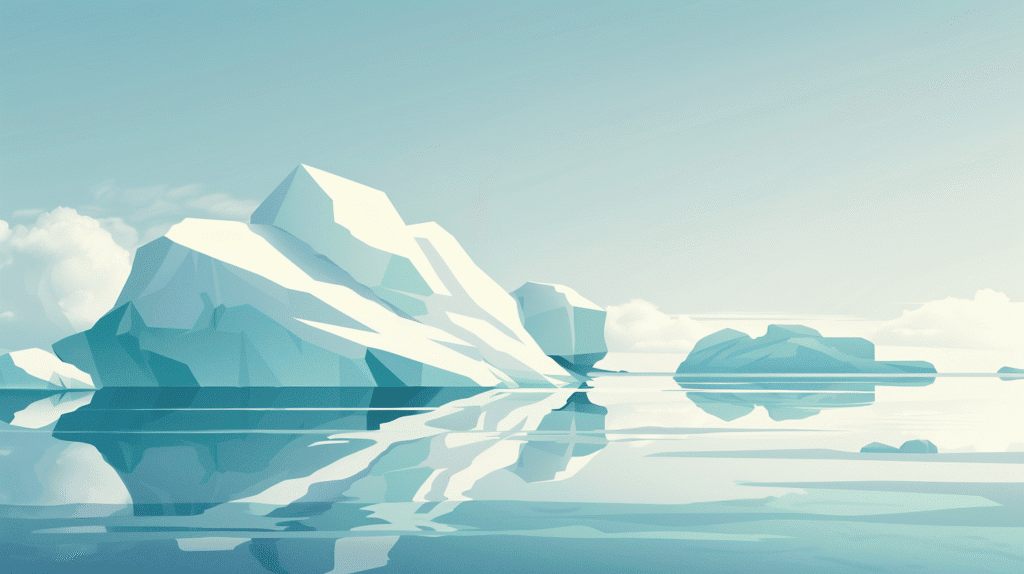
Disappearing Sea Ice: Opening the Arctic Ocean
Arctic sea ice extent has declined by roughly 13% per decade since satellite measurements began in 1979. Summer minimum sea ice extent has shrunk even more dramatically, with some of the lowest measurements on record occurring in recent years.
Seasonal ice-free periods in parts of the Arctic Ocean are becoming longer and more predictable. Scientists project that the Arctic could experience ice-free summers (defined as less than 1 million square kilometers of ice) by mid-century, though some models suggest this could occur even sooner.
This ice retreat is creating entirely new realities:
Extended Navigation Seasons: Routes that were navigable for only a few weeks annually are now accessible for months at a time.
Reduced Ice Thickness: Not only is ice extent shrinking, but remaining ice is thinner and less resilient, making it easier for modern icebreakers to navigate.
New Maritime Frontiers: Areas that were perpetually ice-covered are becoming seasonal open water, fundamentally changing maritime geography.
The Great Thaw: Permafrost and Coastal Changes
Beyond sea ice, Arctic permafrost is thawing at accelerating rates. This thaw creates multiple consequences:
Infrastructure Damage: Buildings, roads, pipelines, and airports built on permafrost are destabilizing as ground that remained frozen for millennia becomes unstable.
Coastal Erosion: Arctic coastlines are eroding rapidly as permafrost cliffs thaw and lose stability, with some areas losing dozens of feet of coastline annually.
Resource Accessibility: Thawing permafrost is exposing mineral deposits and making previously inaccessible areas available for resource extraction.
Carbon Release: Perhaps most ominously, thawing permafrost is releasing stored carbon dioxide and methane, creating a feedback loop that accelerates warming.
New Shipping Routes: Rewriting Global Trade Geography
The most immediate geopolitical consequence of Arctic ice melt is the emergence of new maritime shipping routes that could revolutionize global trade patterns:
The Northern Sea Route (NSR): Running along Russia’s Arctic coast from the Kara Sea to the Bering Strait, this route offers a dramatically shorter passage between Europe and Asia. A ship traveling from Rotterdam to Shanghai via the NSR covers approximately 8,000 nautical miles compared to 11,000 miles through the Suez Canal—a 40% reduction in distance.
The Northwest Passage: Threading through Canada’s Arctic Archipelago, this route connects the Atlantic and Pacific Oceans through a series of channels north of the Canadian mainland. Successfully navigating this passage was a centuries-old quest that claimed numerous ships and explorers; now it’s becoming seasonally viable for commercial vessels.
The Transpolar Sea Route: The most direct but currently most challenging route, passing directly over or very near the North Pole. While still largely impractical, continued ice retreat could make even this route feasible later in the century.
These routes promise significant economic advantages—reduced fuel costs, shorter transit times, and avoidance of congested southern routes through the Suez and Panama Canals. However, they also raise complex questions about sovereignty, safety, environmental protection, and international law.
The Arctic’s Resource Wealth: A Frozen Treasure Chest
Beneath its frozen surface and surrounding waters, the Arctic holds extraordinary natural resource wealth that is driving much of the geopolitical competition in the region.
Energy Resources: The Arctic’s Hydrocarbon Bounty
A landmark 2008 U.S. Geological Survey assessment estimated that the Arctic holds approximately:
- 13% of the world’s undiscovered conventional oil (about 90 billion barrels)
- 30% of undiscovered natural gas (approximately 1,670 trillion cubic feet)
- Vast amounts of natural gas liquids
Most of these resources lie offshore in continental shelf areas, particularly in Russian Arctic waters, the Barents Sea, and areas north of Alaska. These deposits remain largely untapped due to extreme environmental challenges, high extraction costs, and environmental concerns.
The largest known Arctic energy fields include:
Russia’s Yamal Peninsula: Home to massive natural gas deposits that Russia is actively developing, with export capacity to both Europe and Asia.
Alaska’s North Slope: Long-producing oil fields that have been crucial to U.S. energy supply since the 1970s, with potential for expansion into Arctic offshore areas.
Norwegian Barents Sea: Norway has developed sophisticated offshore technology for Arctic energy extraction, balancing economic development with environmental stewardship.
Mineral Wealth: Beyond Hydrocarbons
The Arctic also contains significant deposits of critical minerals:
Rare Earth Elements: Essential for modern electronics, renewable energy technology, and military applications. Greenland, in particular, holds substantial rare earth deposits that have attracted international interest, particularly from China.
Base Metals: Copper, nickel, zinc, and iron ore deposits exist throughout the Arctic. Russia’s Norilsk Nickel operations demonstrate the viability of Arctic mining, though also the severe environmental costs.
Precious Metals: Gold, silver, and platinum group metals are found in various Arctic locations.
Uranium: Nuclear fuel deposits in northern Canada and elsewhere add to the region’s strategic value.
As global demand for these materials intensifies—particularly rare earth elements crucial for renewable energy technology and advanced electronics—the Arctic’s mineral wealth becomes increasingly strategic.
The Resource Paradox: Climate Change Enables Extraction That Worsens Climate Change
Here lies a profound irony: climate change makes Arctic resources accessible while extracting those resources accelerates the climate change that threatens the planet. Developing Arctic oil and gas fields would add significantly to global greenhouse gas emissions, potentially pushing the world past critical climate tipping points.
This creates an ethical and strategic dilemma. Nations argue they need Arctic resources for energy security and economic development, yet extracting those resources undermines global climate stability. The question becomes not just who controls Arctic resources, but whether humanity should exploit them at all.
The Players in the Arctic Power Struggle: Competing Claims and Interests
The Arctic’s transformation from isolated wilderness to strategic frontier has attracted a diverse set of players, each with distinct interests and capabilities.
The Arctic Eight: Nations with Territory Above the Arctic Circle
Russia: The Arctic Superpower
Russia possesses the longest Arctic coastline (over 15,000 miles) and the most extensive Arctic territory. Approximately 20% of Russia’s landmass and 10% of its GDP come from Arctic regions. Russia’s Arctic strategy is comprehensive and aggressive:
- Icebreaker Fleet: Russia operates over 40 icebreakers (including nuclear-powered vessels), dwarfing all other nations combined. The U.S., by comparison, has just two operational icebreakers.
- Military Infrastructure: Russia has reopened and expanded Soviet-era military bases across its Arctic frontier, establishing a significant military presence.
- Resource Development: Massive investments in Arctic energy infrastructure, particularly liquified natural gas (LNG) facilities.
- Northern Sea Route Control: Russia claims significant control over the NSR, requiring foreign vessels to seek permission and use Russian pilots—a position contested by other nations.
Russia views Arctic dominance as essential to its great power status and economic future, making it the most committed Arctic player.
The United States: Strategic Awakening
Despite Alaska’s 1,000-mile Arctic coastline, the U.S. has historically underinvested in Arctic capabilities. However, recognition of the region’s strategic importance is growing:
- Military Presence: Expanded operations at Alaska bases, increased Arctic exercises, and submarine operations beneath ice.
- Resource Interests: Offshore oil and gas potential, though controversial domestically.
- Indigenous Considerations: Significant Alaska Native populations with traditional Arctic ties.
- Icebreaker Gap: Recognition that U.S. icebreaker capacity is dangerously inadequate for Arctic competition.
The U.S. National Strategy for the Arctic emphasizes security, environmental protection, and international cooperation while acknowledging competition with Russia and China.
Canada: Sovereignty and Identity
For Canada, the Arctic is deeply tied to national identity. The Canadian Arctic comprises roughly 40% of Canada’s landmass and is home to significant Indigenous populations. Canada’s Arctic priorities include:
- Sovereignty Assertions: Strong claims over the Northwest Passage as internal Canadian waters (disputed by the U.S. and others who argue it’s an international strait).
- Indigenous Rights: Emphasis on involving Inuit and other Indigenous peoples in Arctic governance.
- Environmental Protection: Balancing resource development with conservation.
- Infrastructure Development: Investments in Arctic communities, ports, and transportation.
Nordic Nations: Experienced Arctic Operators
Norway: Perhaps the most sophisticated Arctic operator, Norway has deep experience with offshore Arctic energy development, responsible resource management, and balancing economic and environmental interests. Norway also maintains close security ties with NATO while sharing an Arctic border with Russia.
Denmark/Greenland: This relationship is complex. Greenland, while part of the Kingdom of Denmark, has increasing autonomy and its own Arctic interests. The island’s vast size, strategic location, and significant resource potential (particularly rare earths) make it increasingly important. The U.S. interest in purchasing Greenland (rejected by Denmark in 2019) demonstrated the island’s strategic value.
Iceland: Despite its small size, Iceland’s location makes it strategically significant. The island serves as a crucial link between North America and Europe and hosts important NATO facilities.
Sweden and Finland: Both have significant Arctic territory and advanced Arctic technology, though neither has Arctic ocean coastline.
Non-Arctic Powers: China and Others Stake Claims
China: The Self-Proclaimed “Near-Arctic State”
Perhaps no non-Arctic nation has been more assertive than China, which declared itself a “near-Arctic state” in its 2018 Arctic Policy White Paper—despite being located over 900 miles from the Arctic Circle.
China’s Arctic interests include:
- Polar Silk Road: Integrating Arctic shipping routes into its Belt and Road Initiative.
- Resource Access: Investments in Arctic mining, particularly in Greenland and Russia.
- Scientific Presence: Multiple Arctic research stations and icebreaker expeditions.
- Strategic Positioning: Building relationships with Arctic nations and companies to ensure access and influence.
China’s growing Arctic presence concerns Western nations, particularly as U.S.-China strategic competition intensifies.
Other Players: The European Union, Japan, South Korea, India, and others maintain Arctic interests through scientific research, economic investments, and strategic planning.
The Arctic Council: Forum for Cooperation or Competition?
The Arctic Council, established in 1996, brings together the Arctic Eight nations along with permanent Indigenous participant organizations and observer states. The council focuses on environmental protection, sustainable development, and scientific cooperation.
However, the council explicitly excludes military security issues—the very domain where Arctic competition is most intense. This limitation means that while the council facilitates important cooperation on environmental and scientific matters, it cannot address the region’s growing security tensions.
Russia’s invasion of Ukraine in 2022 dramatically disrupted Arctic cooperation, with the seven other Arctic nations suspending participation in council activities with Russia—demonstrating how global geopolitics can override regional cooperation frameworks.
Strategic Chokepoints and Maritime Routes: Control of Arctic Passages
The opening of Arctic shipping routes creates new strategic chokepoints—narrow passages where maritime traffic concentrates and where control provides significant strategic advantage.
The Northern Sea Route: Russia’s Maritime Highway
The NSR runs along Russia’s northern coast, passing through several key straits and passages:
Vilkitsky Strait: Separating the Severnaya Zemlya archipelago from mainland Russia, this strait is a critical NSR bottleneck.
Dmitry Laptev Strait: Another narrow passage through Russian Arctic waters.
Bering Strait: The 58-mile-wide passage between Russia and Alaska that connects the Arctic Ocean to the Pacific.
Russia’s claim to regulate NSR traffic remains contentious. Moscow requires foreign vessels to request permission, pay fees, and sometimes use Russian icebreaker escorts and pilots. Other nations argue the NSR includes international waters where such restrictions violate freedom of navigation principles.
The strategic stakes are enormous: control of the NSR would give Russia significant leverage over Europe-Asia trade and the ability to deny access to rival nations.
The Northwest Passage: Canada’s Sovereignty Challenge
The Northwest Passage threads through Canada’s Arctic Archipelago via several possible routes. Canada claims these waters as internal Canadian waters based on historic title and straight baseline principles, giving it the right to regulate all transit.
However, the United States and European Union argue the passage constitutes an international strait where ships enjoy the right of transit passage—essentially innocent passage that cannot be suspended or regulated beyond basic environmental and safety standards.
This legal dispute has remained largely theoretical because ice conditions made regular navigation impossible. But as the passage becomes increasingly viable, the sovereignty question grows more urgent. If Canada cannot effectively control and regulate passage traffic, its sovereignty claims weaken.
The stakes for Canada are profound—not just economic control but fundamental questions of territorial sovereignty and national identity.
The Transpolar Route: The Ultimate Arctic Shortcut
The most direct Arctic route would cross directly over or near the North Pole through waters that are currently ice-covered even in summer. This route would be the shortest passage between major ports but faces the most severe ice conditions.
If warming continues, the Transpolar Route could become viable later in the century, likely as international waters beyond any nation’s control. This would fundamentally shift Arctic geopolitics by providing a passage outside Russian or Canadian jurisdiction.
Comparing Arctic Routes to Traditional Passages
| Route | Distance (Rotterdam to Shanghai) | Current Status | Key Challenges |
|---|---|---|---|
| Suez Canal | ~11,000 nautical miles | Year-round, high traffic | Congestion, political instability, piracy |
| Panama Canal | ~12,000 nautical miles | Year-round | Size restrictions, congestion, canal fees |
| Northern Sea Route | ~8,000 nautical miles | Seasonally viable | Ice conditions, Russian control, infrastructure gaps |
| Northwest Passage | ~9,000 nautical miles | Increasingly viable | Ice variability, sovereignty disputes, limited infrastructure |
| Transpolar Route | ~7,000 nautical miles | Not yet viable | Severe ice, no infrastructure, harsh conditions |
The economic calculus involves not just distance but also fuel costs, transit time reliability, insurance rates (much higher for Arctic routes), icebreaker escort fees, and infrastructure availability.
Militarization of the Arctic: The New Cold War Theater
As Arctic accessibility increases, so does military activity and infrastructure development. The region that once served as a frozen buffer between superpowers is becoming a zone of military competition.
Russia’s Arctic Military Buildup
Russia has undertaken the most extensive Arctic militarization program:
Base Reopening and Expansion: Russia has rebuilt over a dozen Soviet-era bases across its Arctic frontier, including:
- Severomorsk-3 (Novaya Zemlya archipelago)
- Nagurskoye (Franz Josef Land)
- Temp (Kotelny Island)
Air Defense Networks: Comprehensive radar and air defense systems covering Russia’s Arctic approaches.
Northern Fleet: Russia’s Northern Fleet, based in the Arctic, is its most powerful naval force, including nuclear submarines and surface combatants.
Icebreaker Militarization: Russian icebreakers increasingly serve dual civilian-military purposes.
Special Forces: Arctic-specialized military units trained for extreme cold-weather operations.
Russia’s Arctic military expansion reflects both defensive concerns (protecting long, vulnerable coastlines and strategic resources) and offensive capabilities (projecting power and controlling access routes).
NATO’s Response: Increased Arctic Presence
NATO allies, particularly the United States, Norway, and Canada, have responded with increased Arctic military activities:
Joint Exercises: Regular cold-weather exercises like Trident Juncture and Cold Response demonstrate capabilities and political resolve.
Infrastructure Investments: Upgraded bases in Alaska, Norway, and Iceland.
Submarine Operations: Both U.S. and Russian submarines regularly operate beneath Arctic ice, making the region a domain of strategic nuclear deterrence.
Surveillance: Enhanced monitoring of Russian Arctic activities through satellite, aircraft, and undersea sensors.
The challenge for NATO is that Russia has geographic advantages (proximity, longer coastline) and purpose-built Arctic capabilities (icebreakers, cold-weather equipment) that Western nations have not prioritized historically.
China’s Military Interests: The Silent Player
While China has no Arctic territory, its military interests in the region are growing:
- Dual-use research vessels with potential military applications
- Investments in Icelandic and Norwegian ports with possible military utility
- Development of polar navigation capabilities for its navy
- Strategic rationale to ensure Arctic routes remain open to Chinese shipping and naval vessels
The prospect of Chinese military presence in the Arctic deeply concerns both Russia and Western nations, though for different reasons.
The Risk of Arctic Conflict
Several factors increase the risk of military incidents or escalation:
Ambiguous Boundaries: Disputed territorial claims create zones where military encounters could occur.
Increased Activity: More ships, aircraft, and submarines operating in close proximity increase the chance of accidents or miscalculations.
Limited Communication: During periods of geopolitical tension (like the current Russia-West confrontation), communication and cooperation mechanisms break down.
Strategic Nuclear Domain: The Arctic is a primary patrol area for nuclear-armed submarines, making any military incident potentially catastrophic.
Climate Stress: As resources become scarcer globally, Arctic reserves become more valuable and contested.
While direct Arctic conflict remains unlikely, the region has become another arena where great power competition plays out—with environmental and humanitarian consequences.
Indigenous Peoples and Cultural Geography: Voices Too Often Ignored
Amid international competition for Arctic control, the region’s Indigenous peoples—including the Inuit, Iñupiat, Yupik, Sámi, Nenets, Chukchi, and others—face profound challenges to their way of life. These communities have inhabited the Arctic for thousands of years, developing sophisticated knowledge of the environment and sustainable practices adapted to extreme conditions.
How Climate Change Impacts Indigenous Communities
Subsistence Hunting and Fishing: Changing ice conditions disrupt traditional hunting practices. Hunters face dangerous conditions as ice becomes less predictable, while animal migration patterns shift.
Cultural Continuity: Traditional knowledge passed down through generations becomes less reliable as environmental conditions change rapidly. When elders’ knowledge no longer accurately predicts ice, weather, or animal behavior, cultural transmission itself is disrupted.
Infrastructure Damage: Indigenous communities face severe infrastructure challenges as permafrost thaws, damaging homes, water systems, and community buildings.
Food Security: Traditional food sources become less accessible or abundant, forcing greater reliance on expensive imported foods and threatening nutritional health.
Coastal Erosion: Entire villages face displacement as coastlines erode, forcing traumatic relocations that sever connections to ancestral lands.
The Politics of Indigenous Sovereignty
For Indigenous peoples, the Arctic isn’t a geopolitical frontier—it’s home. Yet they often have limited voice in decisions about resource development, shipping routes, and military activities in their territories.
The Inuit Circumpolar Council represents Inuit interests across national boundaries, advocating for Indigenous participation in Arctic governance and decision-making. Key Indigenous positions include:
Right to Participate: Indigenous peoples should have meaningful participation in all Arctic decision-making, not just consultation.
Traditional Knowledge: Indigenous environmental knowledge should be incorporated into scientific research and policy decisions.
Sovereignty and Self-Determination: Indigenous communities should maintain sovereignty over their traditional territories.
Development on Indigenous Terms: Resource development should occur only with Indigenous consent and according to Indigenous priorities.
Environmental Protection: Indigenous communities often prioritize environmental protection over economic development, given their direct dependence on Arctic ecosystems.
The tension between Indigenous rights and national/corporate interests remains a fundamental challenge in Arctic governance—one that will test whether the region’s development occurs equitably or primarily benefits southern populations and corporations while Indigenous peoples bear the costs.
Environmental Geography: The Global Stakes of Arctic Change
The Arctic’s transformation carries consequences far beyond the region itself. The Arctic plays crucial roles in Earth’s climate system, and its degradation affects the entire planet.
Climate Feedback Loops: When Warming Accelerates Itself
Ice-Albedo Feedback: Bright white ice reflects 80-90% of solar radiation back to space. Dark ocean water absorbs 80-90% of solar radiation. As ice melts and exposes more dark water, more heat is absorbed, causing more melting—a self-reinforcing feedback loop.
Permafrost Carbon Release: Arctic permafrost stores approximately 1,700 billion tons of carbon—roughly twice the amount currently in Earth’s atmosphere. As permafrost thaws, microbes decompose previously frozen organic matter, releasing carbon dioxide and methane (a greenhouse gas 25 times more potent than CO2 over a century). This released carbon causes additional warming, which thaws more permafrost—another dangerous feedback.
Methane Hydrates: Frozen methane deposits on the Arctic seafloor could potentially be destabilized by warming water, releasing massive amounts of methane. While scientific uncertainty remains about the magnitude and timing of this risk, it represents a potential “climate bomb” if triggered.
These feedbacks mean that Arctic change accelerates global climate change, affecting weather patterns, sea levels, and ecosystems worldwide.
The Environmental Costs of Development
Exploiting Arctic resources comes with severe environmental risks:
Oil Spill Catastrophe: Cleaning oil spills in icy waters is nearly impossible with current technology. Cold temperatures prevent oil from evaporating or biodegrading normally, while ice blocks access for cleanup equipment. A major spill could devastate Arctic marine ecosystems for decades.
Shipping Impacts: Increased maritime traffic brings noise pollution (disrupting marine mammals), ship strikes on whales, invasive species in ballast water, air pollution from ship emissions, and the risk of accidents in remote areas with limited rescue capability.
Mining Devastation: Arctic mining operations, like Russia’s Norilsk Nickel complex, have created some of the world’s most polluted environments. Toxic runoff contaminates rivers and soils, while processing creates severe air pollution.
Ecosystem Fragility: Arctic ecosystems are particularly vulnerable to disruption because cold temperatures slow recovery processes. Damage that ecosystems in temperate regions might recover from in years could take decades or centuries in Arctic conditions.
The Arctic as Global Climate Regulator
The Arctic’s role extends beyond just regional concerns:
Ocean Circulation: Arctic meltwater affects global ocean circulation patterns, including the Atlantic Meridional Overturning Circulation (AMOC)—which includes the Gulf Stream. Changes to this circulation could dramatically affect climate in Europe and North America.
Jet Stream Impact: Arctic warming is linked to a weakening and wavering jet stream, contributing to extreme weather events in mid-latitudes—prolonged heat waves, cold spells, droughts, and flooding.
Sea Level Rise: While Arctic sea ice melt doesn’t directly raise sea levels (it’s already floating), melting of Greenland’s ice sheet contributes significantly to sea level rise threatening coastal communities worldwide.
The Arctic is thus both a victim of climate change and an amplifier of its effects—making what happens in the far north critically important to everyone on Earth.
The Future of Arctic Geopolitics: Cooperation or Confrontation?
As we look ahead, several scenarios could shape Arctic geopolitics over the coming decades:
Scenario 1: Cooperative Development
In this optimistic scenario, nations recognize that Arctic challenges require collaborative solutions. The Arctic Council is strengthened, international law is respected, and Arctic development proceeds with strong environmental protections and Indigenous participation.
Indicators This Is Happening:
- Renewed cooperation on scientific research despite geopolitical tensions
- Successful negotiation of binding environmental agreements
- Meaningful Indigenous participation in governance
- Shared search and rescue capabilities
- Peaceful resolution of boundary disputes
Scenario 2: Competitive Coexistence
Nations pursue their interests assertively but avoid direct confrontation. Russia dominates its Arctic zones, Western nations strengthen their Arctic capabilities, and China secures commercial access without military presence. Competition exists but is managed through diplomacy.
Indicators This Is Happening:
- Parallel development of competing shipping routes
- Military buildups continue but within boundaries
- Commercial competition without armed conflict
- Selective cooperation on specific issues
- Frozen disputes that neither escalate nor resolve
Scenario 3: Arctic Confrontation
Geopolitical tensions escalate into the Arctic domain. Resource disputes, sovereignty conflicts, or great power competition leads to military incidents, proxy conflicts, or even direct confrontation.
Warning Signs:
- Armed incidents between vessels or aircraft
- Unilateral resource extraction in disputed areas
- Complete breakdown of Arctic Council cooperation
- Military alliances explicitly targeting Arctic rivals
- Cyber attacks on Arctic infrastructure
Factors Determining the Future
Several variables will shape which scenario unfolds:
Climate Change Pace: Faster warming creates more opportunities and pressures, potentially accelerating competition.
Energy Transition: If the world rapidly transitions away from fossil fuels, Arctic oil and gas become less valuable, reducing competitive pressures.
Global Geopolitics: The state of U.S.-Russia and U.S.-China relations will largely determine whether cooperation or confrontation prevails.
Technology: Advances in Arctic operation capabilities, renewable energy, and resource extraction will influence development patterns.
International Law: Whether nations respect existing legal frameworks or pursue unilateral actions will shape the region’s future.
Economic Viability: If Arctic shipping and resource extraction prove economically marginal, competition may remain limited.
Why the Arctic Matters to Everyone: Global Implications
The Arctic’s transformation is not just a regional concern—it has profound implications for everyone on Earth, regardless of where they live.
Economic Implications: Reshaping Global Trade
Shorter Shipping Routes: Arctic passages could reduce maritime shipping distances by 30-40%, potentially saving hundreds of billions in annual transport costs and reducing emissions from shorter voyages (though this benefit might be offset by increased environmental damage).
Supply Chain Diversification: New routes reduce dependence on vulnerable chokepoints like the Suez Canal (blocked in 2021) and Panama Canal (facing water supply issues).
Resource Access: Arctic minerals and energy could affect global commodity markets and supply chains.
Insurance and Finance: New Arctic shipping creates demand for specialized insurance, financing, and services.
Environmental Implications: What Happens in the Arctic Doesn’t Stay in the Arctic
Accelerated Global Warming: Arctic feedback loops amplify climate change worldwide.
Sea Level Rise: Greenland’s ice sheet alone contains enough water to raise sea levels by approximately 24 feet if completely melted, threatening coastal cities globally.
Weather Disruption: Arctic changes affect weather patterns thousands of miles away through jet stream modifications and atmospheric circulation changes.
Biodiversity Loss: Unique Arctic species found nowhere else face extinction if their ice-dependent habitats disappear.
Security Implications: New Military Frontiers
Great Power Competition: The Arctic becomes another domain of U.S.-Russia-China rivalry.
Nuclear Deterrence: Arctic submarine operations remain key to strategic nuclear balance.
NATO-Russia Tensions: The Arctic could become a flashpoint in European security.
Militarization Costs: Nations must invest in expensive Arctic military capabilities or accept strategic disadvantage.
Humanitarian Implications: People at Risk
Indigenous Displacement: Climate refugees from Arctic communities face cultural dislocation and loss of traditional ways of life.
Global Coastal Displacement: Sea level rise from Arctic melting will displace hundreds of millions from coastal areas worldwide over the coming century.
Resource Conflicts: Competition for Arctic resources could escalate into armed conflict with humanitarian consequences.
Final Thoughts: The Arctic as Mirror and Measure of Humanity’s Future
The Arctic represents more than just another geopolitical frontier—it serves as a mirror reflecting humanity’s priorities and a measure of our collective wisdom in addressing the defining challenges of our time.
The region’s rapid transformation confronts us with fundamental questions:
Can we cooperate across national boundaries to manage shared challenges, or will competition drive us toward conflict?
Will we prioritize short-term economic gains over long-term environmental sustainability?
Can Indigenous voices gain meaningful influence in decisions affecting their homelands, or will outside powers simply impose their will?
Do international laws and institutions have the strength to govern a new frontier, or will might make right?
The Arctic’s geography is being rewritten before our eyes. Melting ice is exposing resources, sea routes, and ambitions that have lain dormant for millennia. The question is not whether humans will pursue these opportunities—that process is already well underway. The question is whether we will do so in ways that avoid conflict, protect fragile environments, respect Indigenous rights, and consider the global implications of local actions.
The challenge of the Arctic tests more than maps and borders. It tests whether humanity can manage a global commons responsibly, balance competing national interests with shared planetary concerns, and make decisions that serve not just current populations but future generations who will inherit the consequences of our choices.
In the end, how we approach the Arctic frontier will reveal much about our species’ maturity and wisdom at this critical moment in history. The frozen north is thawing, and with it, the certainties of the past are melting away. What we build in their place—cooperation or confrontation, sustainability or exploitation, equity or domination—will shape the world for centuries to come.